


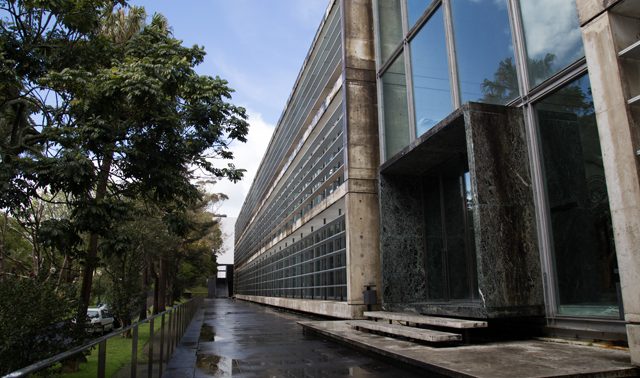
- Collection name: Bank of Algae and Cyanobacteria of the Azores
- Acronym: BACA
- WDCM number: 1242
- Institution: Universidade dos Açores
Address:
Campus Universitário de Ponta Delgada, Rua da Mãe de Deus 9500-321
9500-321 Ponta Delgada, São Miguel
Açores, Portugal - Website: https://baca.uac.pt
Website of the catalogue or database of the collection: https://baca.uac.pt/catalog/
LinkedIn: https://www.linkedin.com/company/baca-culture-collection - Correspondence data:
E-mail: baca@uac.pt; vitor.mc.goncalves@uac.pt; ruben.fs.luz@uac.pt
Tel.:
Correspondent: Vítor Gonçalves (Director), Rúben Luz (Curator)
Member holdings
Group(s) of biological resources stored in the collection: cyanobacteria, eukaryotic algae.
The Bank of Algae and Cyanobacteria of the Azores (BACA), established in 2018, is based at the University of the Azores in Portugal. It is registered with the World Data Centre for Microorganisms (WDCM) as number #1242 and is a member of both the Portuguese Microbial Culture Collection Network (Pt-mBRCN) and the European Collection of Cell Cultures (ECCO).
Strains deposited in BACA have been isolated since 2013 from various environments, including freshwater, marine, brackish, thermal and terrestrial environments, across the nine islands of the Azores archipelago. This culture collection currently comprises approximately 800 microalgae and cyanobacteria strains, of which over 700 strains are publicly available. BACA holds several reference strains of cyanobacteria, with many strains demonstrated to be phylogenetically unique, reinforcing BACA’s distinctive biodiversity and biotechnological potential.
Services offered
Research
BACA is involved in several projects relating to biodiversity, taxonomy, ecology, genomics and toxin-producing strains, as well as the biotechnological valorisation of its strains. Many of these projects involve applied research, including REBECA, Calypso, AlgaeFusion and CyanoFit. The culture collection has several associated laboratories, providing a wide range of research fields and contributing to strain selection and characterisation, whether morphological, chemical, genomic or metabolomic. It also contributes to biomass production at laboratory and semi-pilot scale, extract production, compound extraction and fractionation, and bioactivity screening using in vivo zebrafish models related to lipid reduction, inflammation, toxicity and behaviour, genetic characterization and genomic and metabolomics characterization.Luz, R., Gonçalves, V., Vasconcelos, V. & Urbatzka, R. (2024). Metabolite profiling and bioactivity assessment of cyanobacteria from the Azores reveals unique producers of cytotoxic and lipid reducing compounds. Algal Research, 83,103703. https://doi.org/10.1016/j.algal.2024.103703. Luz, R., Cordeiro, R., Kaštovský, J., Johansen, J. R., Dias, E., Fonseca, A., Urbatzka R., Vasconcelos V. & Gonçalves, V. (2023). Description of four new filamentous cyanobacterial taxa from freshwater habitats in the Azores Archipelago. Journal of Phycology, 59(6), 1323-1338. https://doi.org/10.1111/jpy.13396. Cordeiro, R., Luz, R., Vasconcelos, V., Gonçalves, V., & Fonseca, A. (2020). Cyanobacteria phylogenetic studies reveal evidence for polyphyletic genera from thermal and freshwater habitats. Diversity, 12(8), 298. https://doi.org/10.3390/d12080298.