


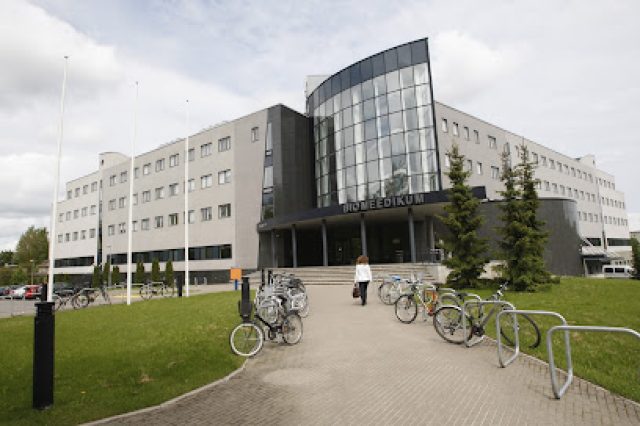
- Collection name: Estonian Human Microbiota Biobank
- Acronym: HUMB
- WDCM number: 977
- Institution: University of Tartu
- Address:
Ravila 19
50411 Tartu
Estonia
- Website: https://eemb.ut.ee/eng/humb_english_introduction_list.php
Website of the catalogue or database of the collection: https://www.eemb.ut.ee/humb/login.php?return=true& - Correspondence data:
E-mail: reet.mandar@ut.ee; tiiu.roop@ut.ee
Tel.: +372 7 374 179
Correspondent: Prof. Reet Mändar; Ms. Tiiu Rööp
Member holdings
Group(s) of biological resources stored in the collection: bacteria, yeasts.
Services offered
Strains are available for academic research under Material Transfer Agreement (MTA). Eligible collaborators include accredited academic institutions, publicly funded research organizations, and non-profit entities engaged in scientific research. Commercial entities may be considered on a case-by-case basis, subject to separate agreements. All collaborations are expected to result in shared scientific outputs, such as publications, dissertations, or patents.