


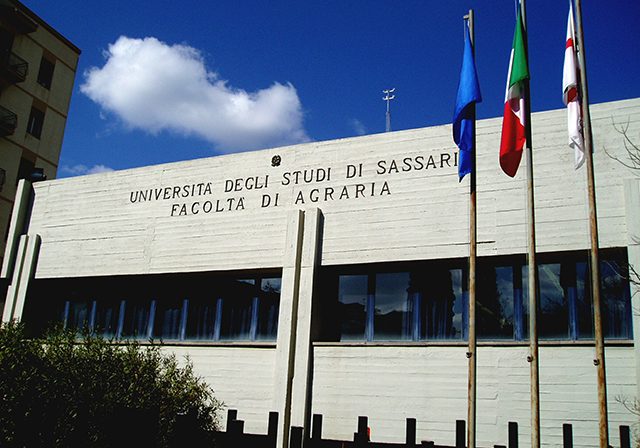
- Collection name: MicroBioDiverSar- University of Sassari Culture Collection
- Acronym: MBDS-UNISSCC
- WDCM number: 1271
- Institution: University of Sassari, Department of Agricultural Sciences
- Address:
Viale Italia 39A
Sassari 07100
Italy - Website: https://www.microbioss.org/ ; https://www.mbds.it/en/home/
Website of the catalogue or database of the collection: https://www.mbds.it/en/mbds-search/ - Correspondence data:
E-mail: mbudroni1@uniss.it
Tel.: +0039 079 229314
Correspondent: prof.ssa Marilena Budroni
Member holdings
Group(s) of biological resources stored in the collection: bacteria, yeasts, filamentous fungi.
Services offered
Research
The MBDS-UNISSCC comprises yeasts, bacteria and fungi isolated over a period of more than 60 years from food, environmental and agri-food matrices, as well as 100 sourdough starters from traditional and artisanal Sardinian bread, which have been recently recovered and preserved. All these microbial resources can be used as biological models for research activities and as valuable tools for process and product innovation. They also act as a driving force for the local business economy, strengthening the link between biodiversity conservation and the production of local foods with geographical indications of origin. The MBDS-UNISSCC staff possesses consolidated expertise in the isolation, characterisation and selection of microorganisms (pure cultures or microbial consortia) for the production of tailored starters with biotechnological applications in the agri-food industry, as well as a plethora of associated services. These include the monitoring and optimisation of fermentation processes, the analysis of fermented products, process and product optimisation, technology transfer to stakeholders and training activities. The MBDS-UNISSCC staff is currently engaged in the study of microbial interactions; the study of the genome and transcriptome of yeasts and bacteria of agri-food and environmental interest; the implementation of microbial technologies to increase the sustainability of agricultural and food production; and the characterisation of agri-food microbial biodiversity. Furthermore, the MBDS-UNISSCC personnel has recently gained experience in implementing an open-access federated database developed for disseminating information associated with the strains deposited in the Microbial BioDiversity Collection of Sardinia (MBDS). Lastly, the MBDS-UNISSCC staff has established a robust network of collaborations with interested parties (businesses, public administrations, schools, research centres) that can benefit from exploiting the microbial resources of the MBDS-UNISSCC, process and product innovation, and training activities.The acronym MBDS-UNISSCC refers to the microbial culture collection of the University of Sassari (UNISS). This contributes to the Microbial BioDiversity Collection of Sardinia (MBDS), alongside the culture collections of Agris Sardegna and the University of Cagliari (UNICA). The MBDS-UNISSCC is hosted at the Department of Agricultural Sciences of the University of Sassari and includes microbial resources (pure cultures and microbial consortia) isolated from a variety of agri-food and environmental matrices and selected based on biotechnological properties of interest. Due to the geographical isolation of Sardinia, these microbial resources represent a reservoir of locally adapted microbial biodiversity with specific genetic lineages and biological capabilities (e.g. MBDS-UNISSCC hosts one of the few flor yeast collections in the world) and can find application as: (i) starters for the production of safe, healthy and sustainable food and feed, and for the valorisation of agro-industrial by-products; (ii) biological models for pathogenicity tests on plants of agricultural interest or for evaluating the efficacy of chemical or natural compounds; (iii) biological control agents to contain damage caused by spoilage microorganisms; (iv) biological markers to assess the impact of human activities and climate change on the environment; (v) soil inoculants with plant growth-promoting and antagonistic activities against phytopathogens. The management and coordination of the MBDS-UNISSCC are overseen by the Institute of General and Applied Microbiology, where 3 associate professors, 2 lecturers, 1 laboratory technician, 1 post-doc and 4 PhD students have acquired consolidated expertise in: the selection of microbial starters for the production of fermented food and feed; the study of microbial interactions; the study of the genome and transcriptome of yeasts and bacteria of agri-food and environmental interest; the implementation of microbial technologies to increase the sustainability of agri-food production; and the characterisation of agri-food microbial biodiversity. All data relating to the MBDS-UNISSCC microbial resources are recorded in a federated database, developed for disseminating information associated with the microbial strains preserved in the MBDS (http://www.mbds.it ) and for promoting their scientific and industrial uses. UNISS is an associate member of the JRU-MIRRI-IT ( http://www.mirri-it.it/.
Quality Management System
ISO9001:2015